Mastectomy and DIEP operation
A rundown of the DIEP operation I had to remove the cancer in my left breast.
If you are squeamish about wounds, operation details, or don’t want to see photos or discussions about breasts, don’t read this post. I’m writing for other breast cancer patients.
A little over two weeks ago, I went up to Berlin for the mastectomy and rebuild of my left breast using my belly. I knew it wasn’t going to be a small operation, but the massive warnings beforehand about all the possible complications rattled me.
Still, it was either cancer or this operation.
I had three surgeons and their teams looking after me in Berlin: a breast cancer oncologist surgeon, the lead plastic surgeon, and my endometriosis surgeon who was the leader of the gynecology/oncology section at the Martin Luther hospital. The oncologist in particular was incredibly helpful, setting up everything even without having a referral or even seeing me in person.
I had to seek a second opinion in Berlin after the leader of the gynecology section in the Schwarzwald-Baar hospital lied about my insurance not covering a mastectomy.
I went into hospital one day earlier than a normal patient would, as I had travelled far. That way we could get all of the tests and planning and preparation done the day before the actual surgery on the next day.
As usual, the surgeons there were top, but this hospital is not so good on the organization front - 6 hours to ‘check in’ and get to my room. Despite having told me I needed to empty my bowels the next day, I didn’t actually have to, and was able to eat and drink normally until evening.
Operation day
The day of the operation, I was first in, and put to sleep very quickly. About 10 hours later, I woke up in intensive care.
I had a binder around my abdomen, three drains in my breast, two in my abdomen, plus a negative pressure vacuum with the sponge running the entire length of the abdominal cut.
Strangley, I woke up screaming about the pain in my left heel, my foot. Most likely, the Achilles tendon had been resting on the hard operating table and was really badly inflammed and bruised and cramped. Loads of painkillers and stretching and hanging the foot over the edge of the bed. The pain disappeared overnight.
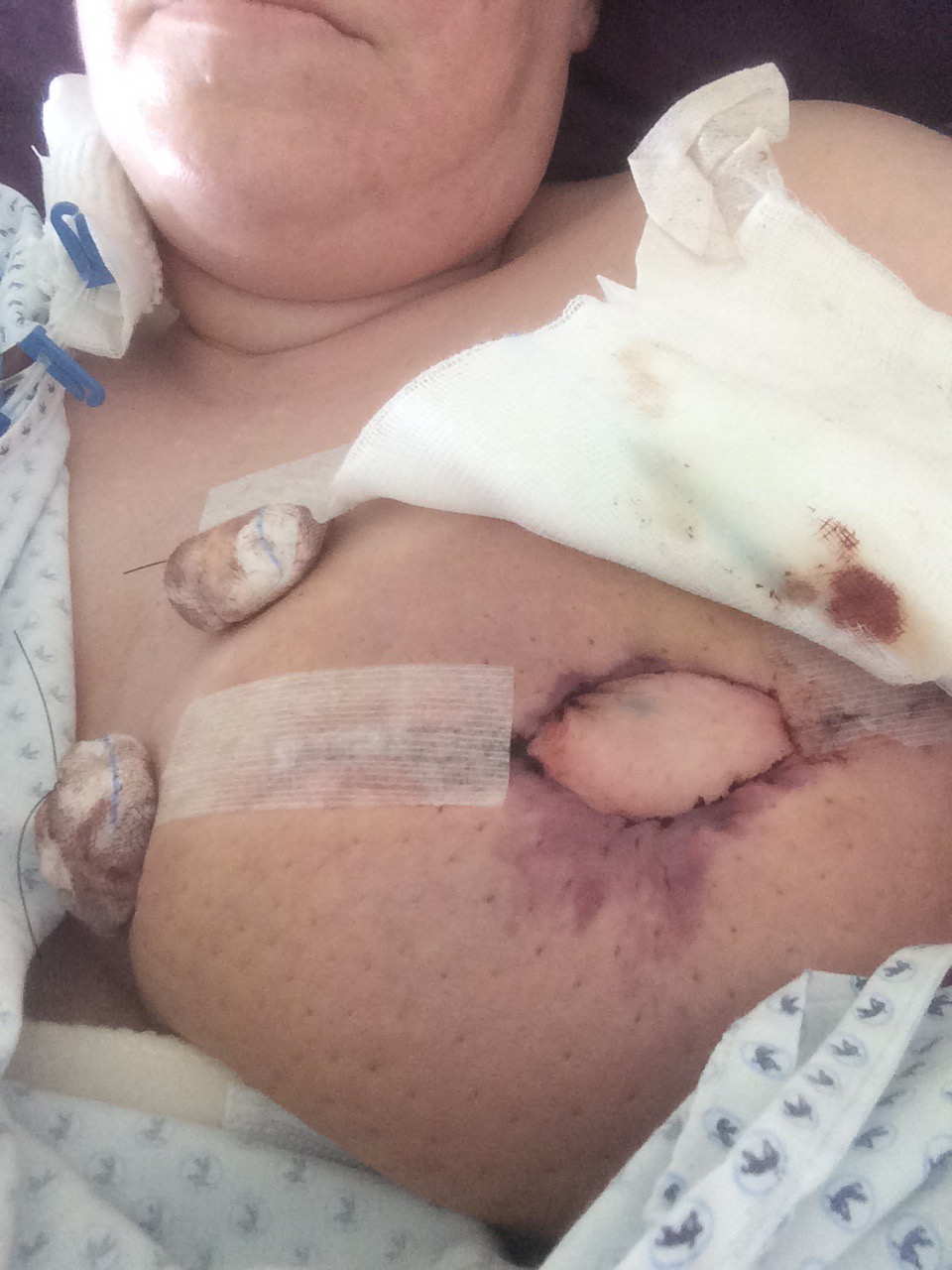 The nurse came to check on the rebuilt breast every hour, for 24 hours, using a portable Doppler ultrasound to check that the blood flow was stable and the vein was still attached. I hardly even woke up to help her during the night I was so exhausted.
After the first day they checked it every two hours, then the second day every four hours, then from day three onwards twice per shift until when I left nine days later. I was given intravenous antibiotics for five days, several times a day. Pain relief was strictly rationed after the first few days.
The most important thing they focused on was to ensure a good, stable blood supply to the newly built breast.
Too many tubes!
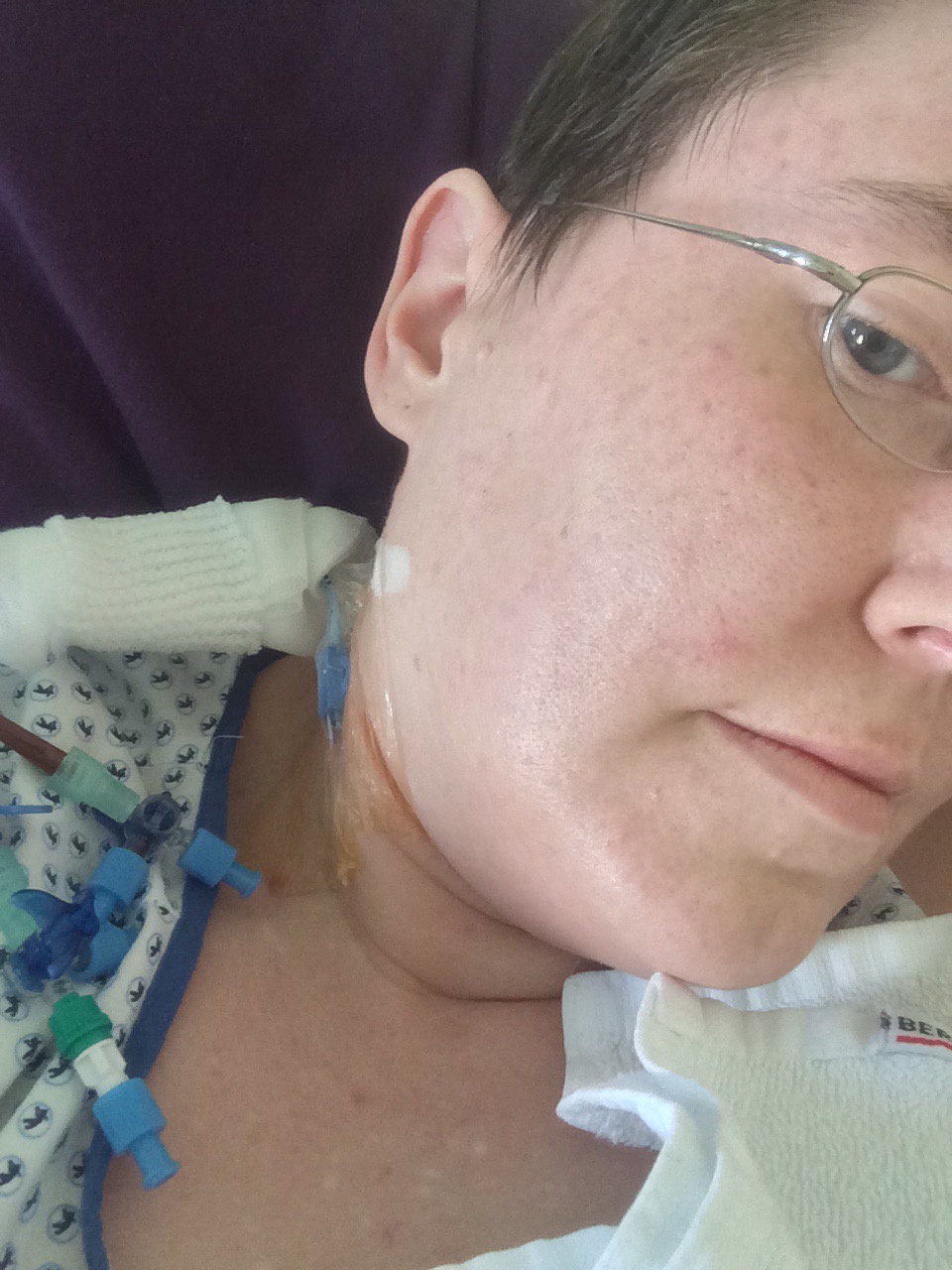 I wasn’t at all mobile for the first four days, with high pain and so many drains, IV lines and a catheter all still attached.
Unfortunately in an organizational hiccup, the nurses had had me pack my things before the operation in case I had to move rooms. That means that I had nothing other than my phone on out and a reduced toiletries bag. The nurses were so overworked that I couldn’t ask them to help me unpack some other things.
They didn’t even have time to help me or the other patients wash or even change the bedsheets most days.
The infection risks from this worried me.
When the drains started coming out, I could sit up more easily, and stand for short periods.
The catheter came out on day four, but because there was an infectious gastro patient in the same room (!), I was not allowed to use the bathroom. Instead, the nurses had me use a portable commode next to my bed. When she had been moved into quarantine, and the bathroom disinfected twice, the nurses let me walk there and back.
It’s fantastic when the catheter comes out. It’s even better when the neck IV lines come out.
The operation site is huge
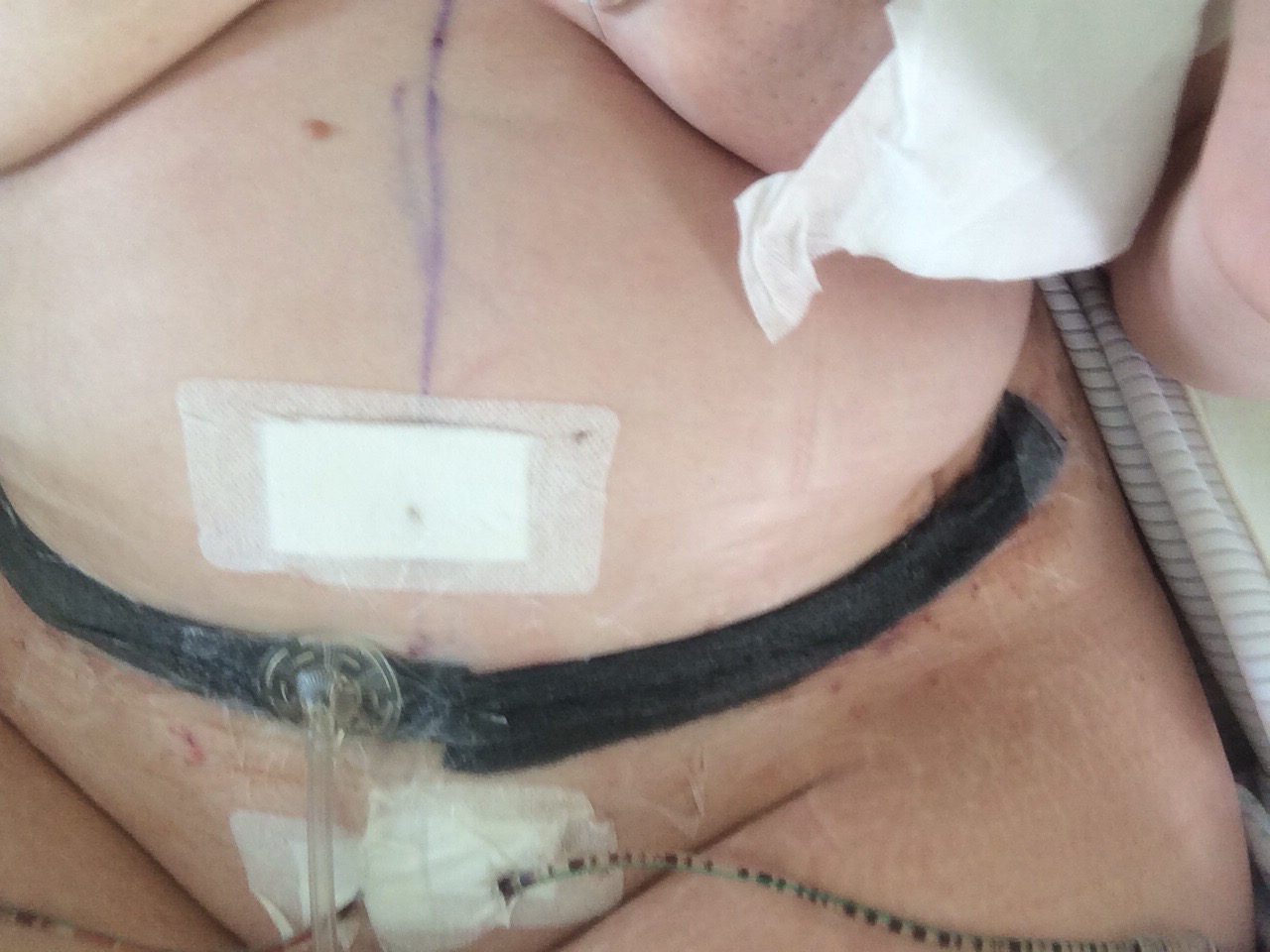 The surgeons separated the skin from the underlying tissue/fat all the way from that black vacuum dressing, from hip to hip and up to the mole at the base of my sternum. Then the belly fat/tissue was cut out. Now, there was too much skin, so they had to pull it down, cut off the extra, and make a new hole for the belly button to be repositioned and sewn into, the poor mangled thing. My entire belly and breast was numb to touch - such a strange feeling!
It’s still numb in 2026 - the nerves and the lymph system throughout my belly and breast have never recovered from this.
The vacuum drain and the drains in the breast also came out on day four as I wasn’t really draining much at all, but that was probably because I was not moving. This was the most painful thing, with three surgeons pulling off the sponge along the cut, and another two the drains from under my breast. The remaining drains came out two days later.
It may have been a little soon to take the drains out, because shortly afterwards, my breast swelled tremendously. The belly started swelling where it had been ‘cored out’ even with the abdominal binder still compressing it all. It may have also been due to the heat (30C!), especially as German hospitals are not air-conditioned.
Ongoing compression
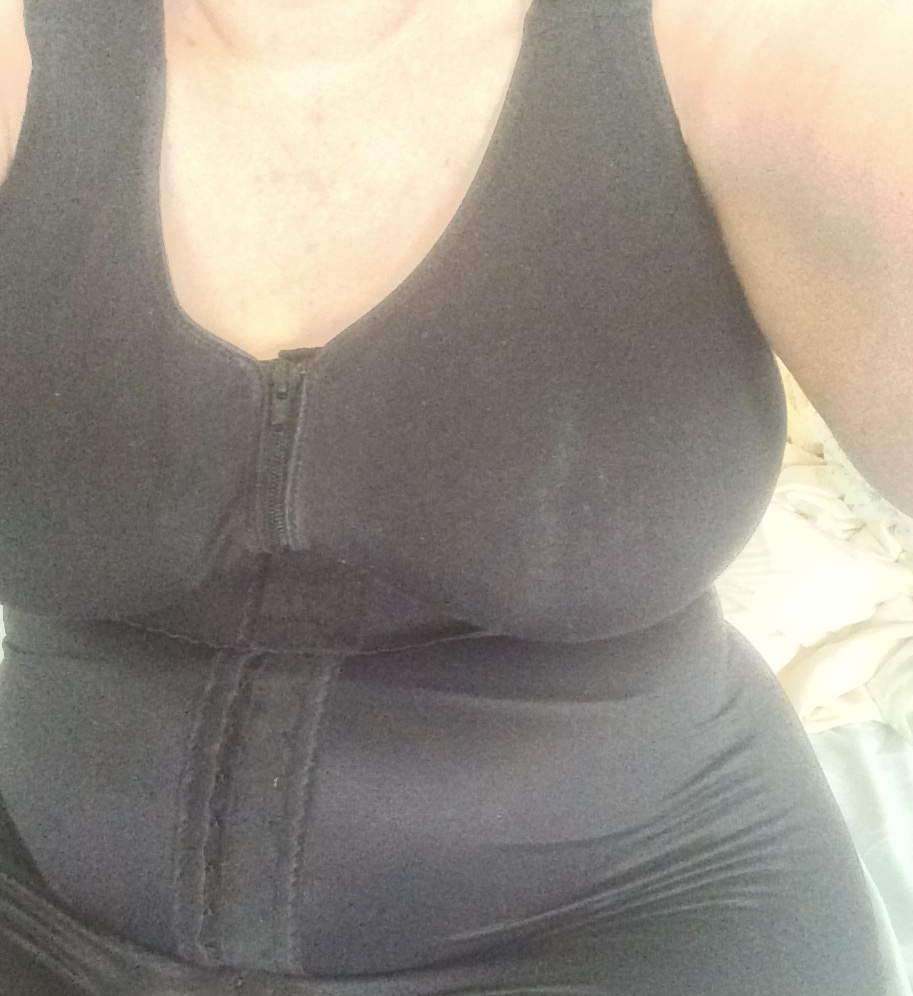 Over the next couple of days, compression clothing was fitted – a compression bra, and what were called Bermuda shorts, from under the breast down to my knee with compression around my middle. The hooks were not too bad to handle with my poor fingers, and this clothing was a huge step up from the abdominal binder, which absolutely did not fit my hourglass shape.
The night before I was due to go home, a seroma (fluid pocket) appeared in the previously troublesome quadrant, and a solid hematoma (bleeding) spread under the breast. The plastic surgeon even came out of the middle of an operation to have a look with a long ultrasound. He said at this point we could only wait and see. I was taking antibiotics anyway, and the seroma was not large enough to drain with a needle.
This hematoma turned into breast fat necrosis, which calcified into hard lumps that pressed on nerves. A second operation reduced that pressure, but in 2026, I still have the hard dead-fat lumps under the DIEP breast.
The nurses hadn’t counted on me going home so soon, so the taper off the painkillers was abrupt. The seven hour journey home was reasonably uneventful, a couple of stops to walk around but I was ready for bed when I got home.
At this point, both the breast and the belly were mostly numb. There’s a layer of liquid between the different layers of skin and tissue - all nerves and most of the lymph system were cut. The most painful thing was a massive blister from the original abdominal binder.
Hospital checklist for mastectomy and DIEP
Here’s what I found were the essentials - what was actually useful during my hospital stay:
- Slip on shoes, no socks.
- Wet wipes, for general skin/hair washing, face washing, and intimate cleansing wipes.
- Electric toothbrush - much less energy and arm wobbling required.
- Earplugs, because the room was full of snorers and sleep talkers and visitors.
- Mobile phone and charger. Make sure you give the phone, or at least a phone number, to a nurse to deliver to you in intensive care, if your family are not waiting in person during the operation.
- A large light shawl that doubles as a wraparound skirt, brilliant in the heat with compression on. In winter, a bathrobe would do the trick.
- Hand disinfectant gel and disinfectant wipes for the bathroom, especially in shared rooms.
- All results of tests leading up to this operation, and reports for related medical conditions.
- Extra short hair - it was so much easier to take care of when I couldn’t use my left arm.
I’d ask visitors to skip the flowers, and instead bring fresh fruit or raw vegetables to munch, at least if you are staying in a German hospital. The food here is abysmal and supremely unhealthy. Plain bread, cheese, butter and preserved meat for breakfast and dinner, and a tasteless cooked warm meal for lunch - typically potatoes or carrots and meat or fish. Also, be prepared for shared rooms with up to five people in them, which means there will always be hordes of noisy visitors.
I went home on day nine, with the rest of my antibiotic course and a couple of mild pain killers.
See the followup post 1.5 years post DIEP for the recovery journey, and second operation to cut out the breast fat necrosis and revise the scar so it stopped pressing on the nerves under my arm.
Checklist for when you get home post DIEP
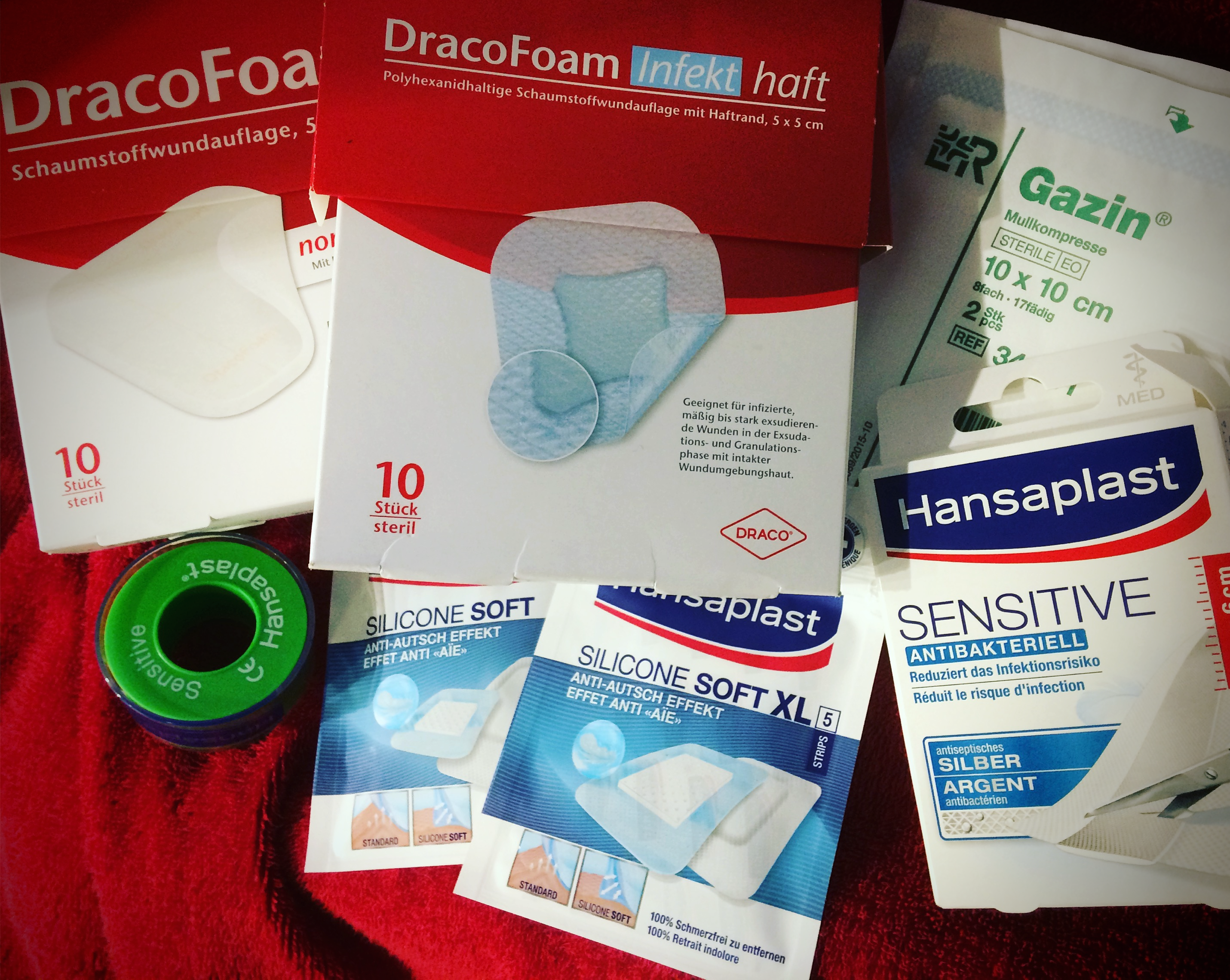
- Non-reactive sensitive dressings, huge numbers of them.
- Salt, gentle wash cloths, and very gentle liquid soap for disinfecting and cleaning.
- Everything at waist height to ensure no stretching.
- Pillows for sleeping in a V position on your back - a wedge for your hed and a leg pillow to raise legs.
- Shirt-style tops - you won’t want to raise your arm for a long time.
- Something you can distract yourself with and get lost in - a game or a book. It will hurt for a long time.
- Frozen meals, a meal service or a helpful team for cooking/cleaning/etc.
- Someone to drive you to the GP, or taxis - you won’t want to take a bus for a while.
- Small pillows to rest over breast and belly below the seatbelt - a bumpy road will be too painful without this!
- Slip on slippers, sandals and shoes - no bending and stretching, no socks for a while (without help).
- Pain killers - whatever the hospital allows. Take it as regularly as possible.
- Ice packs - can help with hematoma pain.
- Wash nets for washing the compression garments.