Build your own endometriosis rehabilitation course
After my sixth laparoscopy for endometriosis, this time a hysterectomy to remove the adenomyosis and cyst-filled cervix, I was meant to go on a 4-5 week endometriosis rehabilitation course. This is what it would have entailed.
Unfortunately, the health insurer decided I didn’t need a ‘Kur’ (rehabilitation course), and that I should ‘build my own’ course around local therapists.
German Endometriosis Kur (rehab)
- Water aerobics
- Physiotherapy both in and out of water
- Pelvic and back strength classes
- Relaxation classes
- Pain management classes
- Massage
- Dietary guidelines to help reduce endometriosis and pain
- Optimization of pain medications with an anesthesiologist
- Gynecological exam and medications for endometriosis
- Electro-therapy for pain management
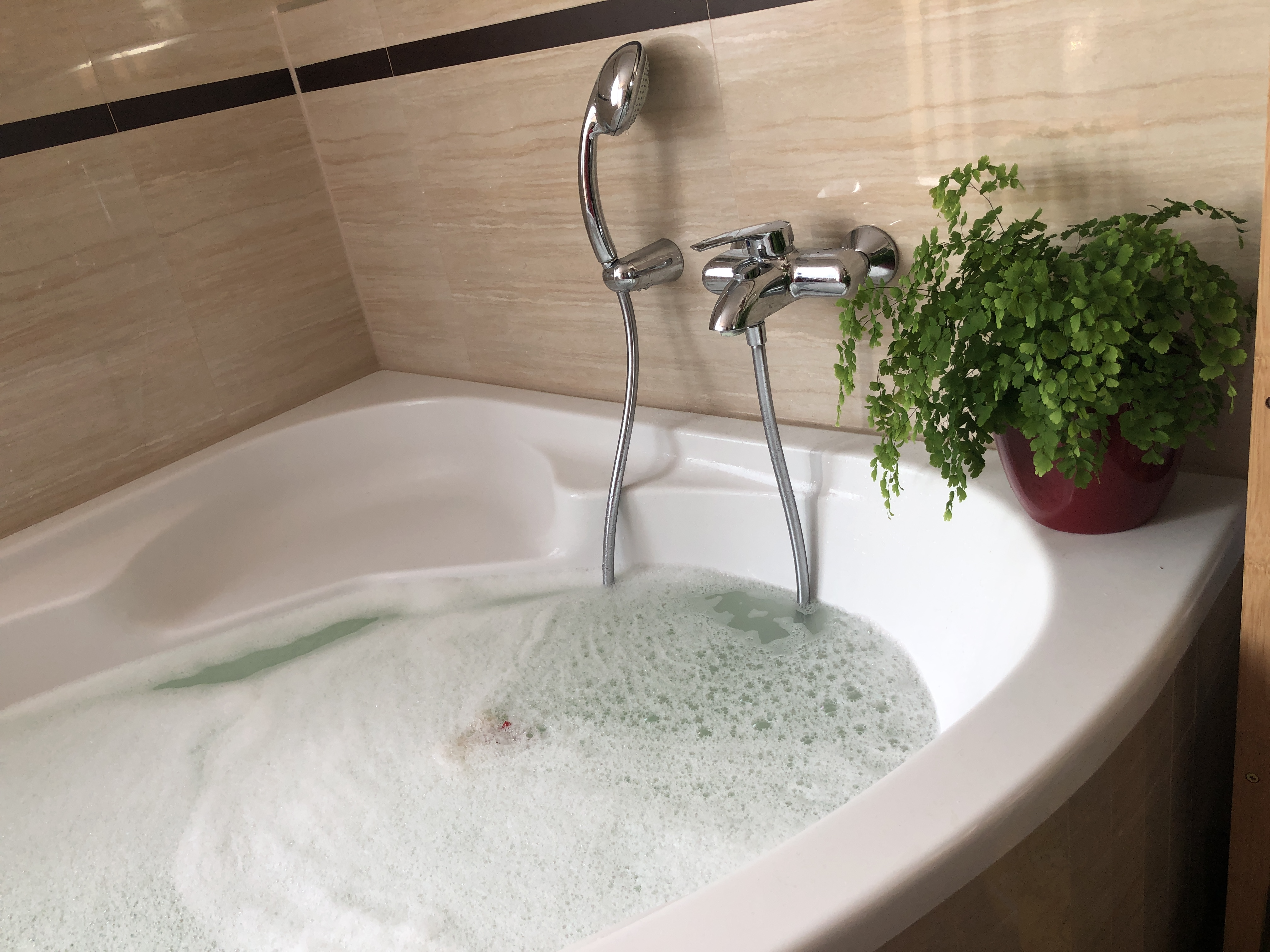
- Balneotherapy (lots of baths with salts and herbs)
- Mud packs and mud baths
- Psychotherapy for pain management
- Psychotherapy to help with the inability to have children (this is a non-issue for me, as I have never wanted kids, and absolutely wouldn’t want to pass these genetic illnesses onto another human!)
The schedule for this endometriosis rehab is a packed one - from 7am until 6pm you would run from appointment to appointment, Monday through to Saturday.
I was really looking forward to going, but unfortunately, the health insurers wouldn’t allow it.
Instead, they recommended that I see a local psychotherapist, specializing in infertility and/or psychosomatic causes of pain. No idea why they suggested this as my way forward, because the lab results report I still have endometriosis after the operation and would benefit from a ‘Kur’, and I also explained I really don’t want kids - no psychosomatic therapy needed for that!
They also gave me a list of ‘pain specialists’, but most of them were orthopedic doctors. Pelvic soft tissue problems are not joint problems!
Building my own rehabilitation course
After a day of being crazily upset at the insurers, and knowing these decisions here can’t easily be questioned, I set about building my own ‘rehab course’ with local doctors and therapists.
There are long waiting times, I will have to pay for a lot without insurance coverage, and it won’t be intensive, but I think I can cover most of the content of the endometriosis rehabilitation course.
Update 2026: Not long after I wrote this initial post, I was diagnosed with spondyloarthropathy, which meant a lot of the physical therapies would by mostly covered by insurance. Yay!
Psychotherapy
PTSD counseling is important, as is for living with chronic pain - I’ve never had psychological ‘treatment’ for that. Unfortunately, there’s a multi-year wait for most psychologists, and no English-speaking doctor specializes in either of these areas. The two local trauma therapists refused to take on non-native German speakers.
Update 2026: A newly graduated trauma/chronic pain-specialised therapist has taken me on! I’m learning new coping skills for the first time in decades. It’s more helpful than I had thought it would be.
Anesthesiology or pain clinic
This is a good choice for looking at my pain medications (my current low-dose codeine/paracetamol does not cover, so I just take nothing and not move around). I’ve found a specialist who also deals with fibromyalgia. They also offer electro-therapy, physiotherapy and massage. But it’s a 4 month wait.
Update 2026: This one fell through. The two pain clinics I have contacted did not want to take on a non-injury patient - my allergies, medications and co-morbid diseases are too complex for these clinics!
Water aerobics
Joined a class in a warm water pool - there are only a few of these pools in Leipzig. There was a 2 month wait for the next class to start. This was most excellent, while I lived near the pool - I could walk there and back.
Update 2026: Ahhhh…. covid changed a lot of things. Now with a second and terminal auto-immune disease that worsens with respiratory infections, I don’t go near indoor pools.
Gymnastik
This is the movement-oriented physiotherapy. Ideally, it would have been in the warm pool, but they have no openings for 6+ months. So, same facility, but on land - probably better for back/pelvis exercises anyway. Gathering forms, hopefully not a lot wait.
Update 2026: Yup - ‘gymnastik’ was most helpful, with an exercise routine designed by a physiotherapist, which included pelvic exercises to fix the incontinence caused by the hysterectomy. I now have a treadmill, free weights, yoga equipment and stretching blocks that I continue to use every day or two.
Physiotherapy
I already go once a week to keep my C2 neck/headache spinal problem in check. I think this will be bumped up to twice a week. This is more manual therapy than physiotherapy - a mixture of massage and stretching, no exercises.
Update 2026: Manual therapy/Krankengymnastik with physiotherapists has essentially been a constant in my life since this point in 2015. Soon after I was diagnosed with psoriatic/spondyloarthritis, and this is the main treatment for joint problems. In Germany, the orthopedic surgeon is the doctor who can prescribe this regularly.
Heat therapy
Heat packs (minus the mud) have always been in constant use to deal with the endometriosis and adenomyosis pain. This is a good excuse to buy some more.
Update 2026: I have worn out so many heat packs now! They are still in daily use, and I’m dreading the time the microwave decides to retire - it’s hard to find a non-turntable microwave these days.
Dietition
The health insurer offers ‘dietary classes’, but no one in this city knows anything specific about endometriosis. I’ll have to research this more online. It’s hard sifting out the nonsense from science-based information. A day or two to spend in PubMed.
Update 2026: I have still not seen any dietiticians, for any of my illnesses, and they have not been recommended to me. I think the GPs, specialists and the gastro clinic are happy with what I eat.
Relaxation
Easy to do at home. I already meditate once a day as it helps with pain and do progressive relaxation as I fall asleep. Increasing meditation to twice a day and starting tai chi.
Update 2026: Yup, still doing meditation and basic tai chi movements regularly. Spinning, knitting, crochet and weaving are also helping to calm in highly anxious or painful times.
Balneotherapy
This is another easy one to do at home - baths with epsom salts or other good stuff. I think I’ll skip the mud baths though - too much cleaning up!
Update 2026: We lived for a few years in a house with a supremely uncomfortable small bath. Now, we’re back in a flat with a nicer bath and I’m trying to have them more regularly. Apart from those, a hot morning shower is the only way I can get my back mobile and my joints moving. Silly arthritis.
Massage
There are many massage therapists, but I suspect few have experience with reducing adhesions and improving mobility in the pelvis. Will need to ask around. ‘Twill be expensive as it’s not covered by insurance at all! Or I can try to train my partner …
Update 2026: This never happened, unfortunately, as it was too expensive on top of the gap payments for physiotherapy and medications. I did however, get a massage seat that I use for shoulder blade cramps, and a separate neck massager that also works well in my severaly swayed back. If I can, I use one of the lymph drainage sessions I get because of the breast cancer as a deeper massage to work on the belly scars and adhesions from all the laparoscopies.
Therapist team
Along with my general practicioner (Hausarzt), these are the most important specialists for managing the endometriosis going forward.
Gynecologist
I’ve optimised my endometriosis medications already, and don’t want to do a fourth course of Zoladex/Lupron any time soon, so my gynecologist doesn’t have much to do.
Update 2026: Well, I’ve had to change gynecologists and endometriosis surgeons a couple of times, especially as I developed breast cancer in 2017. Now, I’m monitored yearly at a hospital that has both breast cancer and endometriosis centers. The gynecologist prescribes lymph draining massage for the breast transplant every couple of months.
Urologist and nephrologist
This specialist was added to my team as the bladder pain from the hysterectomy didn’t go away quickly, and neither did the slight incontinence.
Update 2026: With targeted pelvic exercises, the incontinence resolved in 6 months after the hysterectomy.
During the oopherectomy, they discovered endometriosis had stuck down the left kidney’s ureters with the left ovary. They also discovered a complex cyst that needs to be monitored every year with an ultrasound by a local urologist.
However, I’m now also regularly monitored by the hospital’s rheumatology and nephrology departments because of the systemic sclerosis.
Bowel and stomach specialists
And I should search for a bowel doctor, to look (again) into the cyclical bowel bleeding, that can only be endometriosis, even though it couldn’t be seen in the laparoscopy and colonoscopy.
Update 2026: Yup, both the bowel and stomach got their own specialist team. The bowel bleeding did not stop with either the hysterectomy or the later oopherectomy. Now that I am in menopause, they are certain that it’s not because of the endometriosis. I see this team regularly for monitoring, endoscopic tests and biopsies - systemic sclerosis and spondyloarthropathy are both rough on the digestion - and more recently an iron infusion due to the persistent anaemia.