Basic questions - conversation prompts for beginners
Beginner conversation classes can be very difficult – students are often scared to talk when they are starting to learn a new language. But, talking is one of the fastest ways both to build confidence – mistakes don’t kill you – and to cement new words and grammar structures in memory.
When teaching beginner conversation classes, I very rarely correct anything students say. My older students don’t have to pass any exams, and are typically learning either for work (to understand customers on the phone), to be able to use it when they travel, or simply to have fun learning.
And the first step in a beginner conversation class is to know how to ask questions. Of course, you can point at a person and say “Name?” or point at your wrist and say “Time?” with a rising tone at the end. I sometimes do that during class in a student’s native language to show them that you don’t have to be scared when you talk, even if you know very few words.
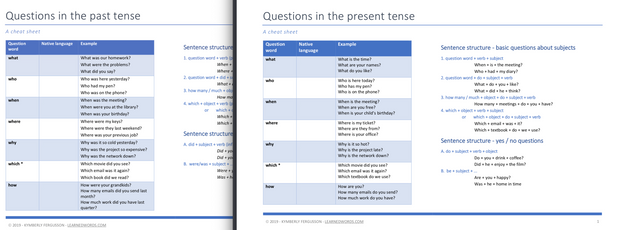
To get an idea of what vocabulary the students know and/or are comfortable with, do a few brainstorming exercises. Then use those words to show how to structure simple question sentences. First using present tense, and then, or in the next lesson, past tense.
Warm up activities
- Present tense – brainstorm nouns and verbs so they have some vocabulary to work with. Beginners are typically surprised at how much they actually know!
- Past tense – take those verbs they brainstormed and turn them into past tense as a class.
- Both – get students to mime actions and the others need to guess the verb (past or present) or noun.
Next, introduce (or revise the actual question words): what, when, where, who, why, how. For a class a bit above absolute beginners, also include which. You could use fill-in-the-gap style sample questions, or simply ask students very simple questions to get them used to how they sound.
Note: Pay particular attention to the is/are differences and questions with ‘do’ in them when doing the introductory activities. You may want to cover nouns, plurals and basic possessives (mine/my) in an earlier class.

- What does Vegemite taste like?
- Which is better - vegemite, marmite or promite?
- How do you eat vegemite?
- Where does vegemite come from?
- Who likes vegemite?
- Why are Australians “happy little vegemites”?
Cheat sheets
- Basic questions – present tense and past tense
Tip: For printed handouts and cheat sheets, A5 is a great size in conversation classes – it doesn’t take so much attention away from listening to conversation partners.
Conversation activities
Learn more about each other
Interviews in pairs or small groups. Students can write their own questions to learn more about each other, or create a list as a class with your help. Switch the groups around after short time so that students can ask their questions again.
Design a character
Small groups of students should design a fictional character (or pick a character that they have read about). The groups should note down who their character is, what they like, what they do, where they are from, where they want to go on holidays, where they live, what pets they have, etc. Then, taking turns, each group asks about the other groups’ characters. At the end, decide who would be friends (or enemies!).
Favourite movies, series or books
Ask simple questions about each student’s favourite things to watch or read. This works well as an entire class activity, because most people want ideas on what to watch or read next!
Favourite meals and recipes
Another good whole-class activity. I haven’t yet had a class that didn’t like talking about food. There’ll be good conversations about what foods and flavours they like and dislike, favourite snacks and treats, good restaurants nearby, and how to cook their favourite recipes.